The Work of Art (and Science) in the Age of Algorithmic Reproducibility
Table of Contents
Recently, I was reading the essay The Work of Art in the Age of Mechanical Reproducibility by Walter Benjamin ⟦cite:Ben68⟧ , which is an essay in response to the rise of technologies such as photography, whose ability to create almost perfect replicas of art caused art to lose what he calls “aura”. I can’t help but draw parallels with the current AI crisis people are grappling with. AI “mechanically reproduces” human artistic and scientific work in a fashion far more radical than photography, and it challenges the uniqueness, “aura” if you will, of human efforts. Suddenly, we find ourselves compelled to rethink these questions: what really makes us unique? What makes our efforts meaningful? What constitutes our own authenticity?
Algorithmic Reproducibility of Art
To be clear, as I understand it, Benjamin was not lamenting the loss of “aura” of artworks. Instead, what he realized was that the emergence of mechanical reproducibility changes the very nature of art itself. The “aura” he refers to in an artwork is its unique presence in time and space, to which people ascribe cult value. Cult value, as Benjamin defines it, is the value of an artwork rooted in a tradition or ritual, not necessarily that of a religion. This is what he claims withers away as mechanical reproductions proliferate –– their reproduction en masse makes them lose their magic. What Benjamin also claims is that the decay of cult value in a work of art is accompanied by the rise of its exhibition value, the value art has for being displayed, circulated, and politicized. To my understanding, what Benjamin is getting at is that the perception by the masses of the artwork has become part of the art itself. Exhibition value, as he claims, reaches its apotheosis in photography and film. In these art forms, the line between original and replica is blurred. There is no more uniqueness to the original than to the replica — the mass impression of the artwork becomes the true medium.
Today, almost a century after Benjamin’s essay, we find ourselves confronted with what I call algorithmic reproducibility of artistic (and scientific) works. By algorithmic reproduction, I mean mainly generative AI technologies applied to art (and science), where a machine learning algorithm is trained on an enormous amount of data created by human experts and is able to produce work of a quality that is on par with humans from mere prompts. Understandably, there is uproar in artist communities against them. There are significant ethical issues with using people’s work without their consent and, even worse, developing a technology that has the potential to devastate their job prospects. This issue, however, is not what I want to focus on in this essay. The question I am more troubled by is, since it is likely that AI is here to stay, how will people view the human activity of art and science as a whole? How will the value of human efforts in these domains change?
Not too long ago, Twitter/X user “SHL0MS” tweeted the following:
I just generated an image in the style of a Monet painting using AI.
Please describe, in as much detail as possible, what makes this inferior to a real Monet painting.
and he attached the following image:
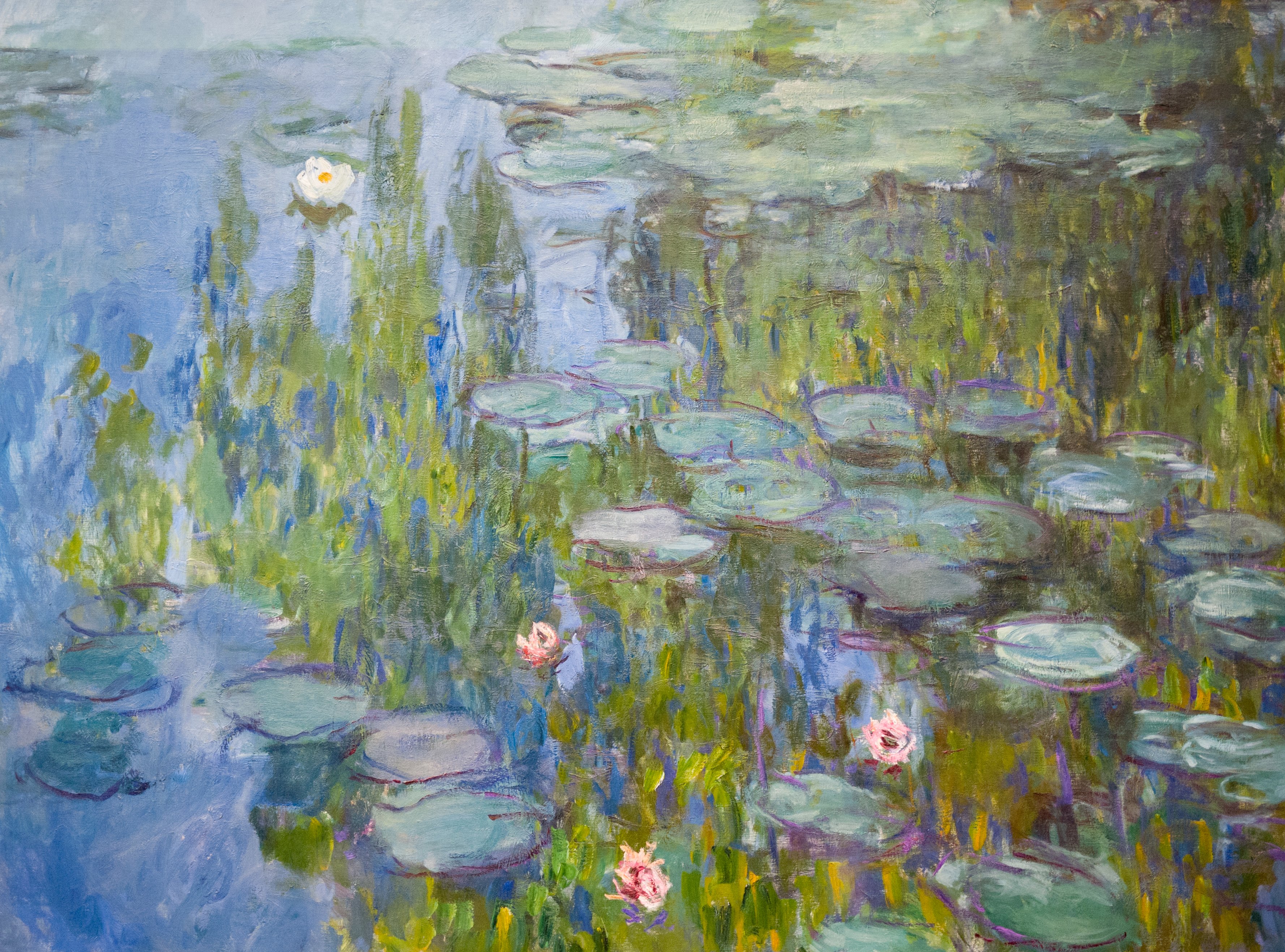
Unsurprisingly, the tweet was immediately flooded with the fury of the internet. People were eager to point out flaws in the image – it was “sloppy” and “incoherent”, and apparently a travesty of the real Monet. Ostensibly, this tweet seemed like a typical taunt by run-of-the-mill “tech bros” on social media. However, what surprised everybody was that the tweet turned out to be a cunning lie: “SHL0MS” revealed that the painting in the image was in fact a real Claude Monet painting – just an obscure one that people were unlikely to recognize, but a bona fide Monet work. This reveals to me at least two facts: 1. generative AI for images has reached a level indistinguishable from the work of a human expert, and 2. people are biased against AI-generated work, in the sense that, although many are reluctant to admit it, it is not the quality of the work but the knowledge that it is AI-generated that repels them. For the record, I say all this not to defend generative AI or to belittle human artists, but to argue that we can’t avoid the hard questions in life by lying to ourselves.
A common argument I see against the value of AI art is that humans train and practise for decades to achieve artistic mastery and musical virtuosity – the human sweat and tears that went into the artwork are what endow it with meaning, something that AI lacks. I must disagree with this argument. Art has long been detached from the amount of skill required to make it. Since modernity, there have been many artworks deemed meaningful and thought-provoking that do not require a very high level of skill. One such example is the famed Who’s Afraid of Red, Yellow and Blue by Barnett Newman. If one employs this argument against AI art, one also dismisses the value of these works.
Another argument is that an artwork is about the experience and expression of the author, which AI does not have since it lacks an ego. I think this is only partially true. Invoking Benjamin again, the value of a work of art has shifted away from the aura of the original and into its exhibition before the masses. AI-generated art is just as capable as its human counterparts of being widely exhibited to the masses. Online, AI-generated content is widely circulated and reposted. One can also argue from the perspective of Roland Barthes, exemplified by his The Death of the Author ⟦cite:Bar77⟧ , that one should not treat the author as the authority over their work, since even the most original works depend on inherited ideas such as heroism, love, family, and so on.
How, then, should we value a work of art? Surveying (mostly online) artist communities, one finds a dominant and often vehement view that only humans make art, and whatever AI makes is declared “slop”. While I completely sympathize with this sentiment, I take issue with this stance, in that it seems to me a regression back to the cult value of art, where art must be rooted in the tradition, in this case, of these artist communities, and the nontraditional way of using AI to make art is declared a sacrilege. Cult value should not be the way we value art. When value is rooted in a tradition, it is necessarily entangled with the power structures of that tradition, many of which are of an oppressive nature.
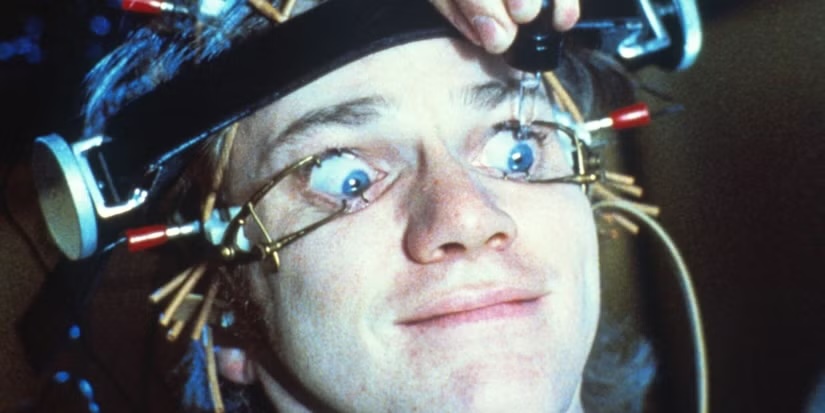
Should we then value a work of art by its exhibition value? I also believe not, but with a subtlety. Today, we are in an age where the meaning of exhibition is very different from what it was when Benjamin lived. In particular, we have commodified the exhibition of our lives on social media to an extent that is pathological. The attention of social media users has become the commodity of the information age. Every single platform is pushing for more engagement, more attention from users, and more dopamine, which has permanently altered our brain chemistry. It is no wonder that AI art gets a high number of views – it is trained to do precisely that: videos of Stephen Hawking skateboarding in his wheelchair, Peter Griffin as a real-life person, historical figures coming back to life and getting speeding tickets, etc. Our spiritual life has become the Bagel from the film Everything Everywhere All at Once. There is everything, but also nothing, and we are forced to be spectators. To me, experiencing social media feels like being Malcolm McDowell strapped to the seat and having my eyes forcibly held open.
I still believe exhibition value, in the sense Benjamin intended, remains deeply important, but in our age it clearly does not suffice. In my opinion, it should be replaced by an authenticity value. This is a concept that I have not thought through clearly yet, and at the moment it is only a vague idea. Authenticity has been on the decline. Technology has enabled us to be more connected than ever, but less and less in touch with each other. We present a façade of ourselves to the world, instead of our genuinely flawed selves. AI is the culmination of this trend: because it is trained on internet media produced by us, its hollowness and superficiality are a reflection of our own. To me, a work of art should contain or foster authenticity, from the author, the spectator, or both. This is what I mean by authenticity value. A human work of art does not automatically have authenticity value, and a non-human work of art is not automatically void of it. Admittedly, it will take a lot more work to develop this idea into something more philosophically mature.
In Benjamin’s essay, he claimed that while technologies like photography and film have decimated cult value, they have become unique art forms in their own right with tremendous exhibition value. Whether AI has the same potential is a very interesting question. I will make the perhaps outrageous claim here that it probably does. If AI could be used in a way that reflects human authenticity, it is not inconceivable that a genuinely valuable artwork could be born from it, although none has so far. This is by far my biggest disagreement with mainstream opinion from artists.
Algorithmic Reproducibility of Science
When it comes to AI in science, it becomes a very different issue, as the goal is the search for truth regardless of tools. Some people have claimed that there is an artistic element to math research when it comes to research taste. I beg to differ. One cannot claim that math is like art just because human researchers have a sense of which kinds of math are more beautiful or elegant – that is an aesthetic formed from personal experience, and an aesthetic is very different from art. What then will AI bring to science?
I have recently written an essay specifically discussing this in the case of math. For physics, there is a very good discussion by Prof. David Kipping on YouTube. In computer science, there have been experiments such as autonomous researchers. In biology labs, people are experimenting with autonomous AI research via robots.
In short, I do not think AI challenges science as much as it does art. The core motivation of science still remains unchanged, but how one does science, and who will be good at the new way of doing science, will likely be different. I expect that the new generation of mathematicians will be training themselves with AI, and will likely be operating on a higher level of reasoning than their predecessors once they are used to working with AI.
References
- [Ben68]Walter Benjamin. Hannah Arendt (ed.). Translated by Harry Zohn. The Work of Art in the Age of Mechanical Reproduction. In Illuminations. Schocken Books. 1968.
- [Ben02]Walter Benjamin. Howard Eiland and Michael W. Jennings (ed.). Translated by Edmund Jephcott, Howard Eiland, and others. The Work of Art in the Age of Its Technological Reproducibility: Second Version. In Walter Benjamin: Selected Writings, Volume 3: 1935-1938. Harvard University Press. 2002.
- [Bar77]Roland Barthes. Translated by Stephen Heath. The Death of the Author. In Image, Music, Text. Hill and Wang. 1977.